EU Court Holds Websites Responsible for GDPR Compliance with User Content
The EU court ruled that websites hosting user content must actively protect user privacy and comply with GDPR, including for anonymous users, or face heavy fines.


The EU court ruled that websites hosting user content must actively protect user privacy and comply with GDPR, including for anonymous users, or face heavy fines.

Over 30 privacy authorities will review child-focused websites and apps Nov 3–7, 2025, checking data collection, transparency, age assurance, and privacy safeguards under data protection rules.

The GPEN Sweep 2024 report highlights the prevalence of deceptive design patterns in websites and apps, urging stricter enforcement of data protection laws and more transparent design practices.

The European Commission is actively working to reform the digital advertising industry’s reliance on cookies, with a focus on enhancing user privacy in line with GDPR standards.
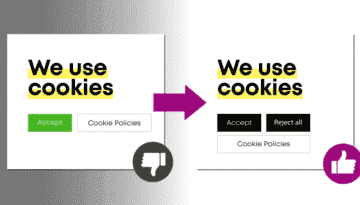
ICO enforces fair cookie consent practices in the UK.

Google is developing a new feature, IP Protection, to obstruct device fingerprinting by masking users’ IP addresses from third-party domains.

Websites for mental health crisis resources across the country—which promise anonymity for visitors, many of whom are at a desperate moment in their lives—have been quietly sending sensitive visitor data to Facebook

French data protection authority fined health website doctiddimo.fr for failures in processing of health data and non-compliance with cookie requirements.
Italian DPA fined a marketing agency for use of ‘dark patterns’ on their website.
German DPAs issued an opinion concerning websites that offer visitors options to access a free version which tracks user behavior or a paid version without monitoring.
More and more websites have added an option to say “no” to cookies and other tracking- as foreseen by the GDPR. Where did this trend come from?

Want to protect your privacy? A cookie paywall on a single site could cost you €75 a year.